How to read hallmarks on vintage silver
Turn the piece over before you look at anything else. A small stamp tells you what the maker claimed the metal to be. This guide covers what the common stamps mean, where to find them, and when a stamp should make you more careful, not less.
Numbers: how much of the metal is silver
A number stamped on silver is the share of pure silver in every thousand parts of the metal. The higher the number, the more silver is in the piece. Pure silver is soft, so most jewelry mixes in a little copper to make it stronger.
| Stamp | Silver content | Where you see it |
|---|---|---|
| 999 | 99.9% | Called fine or pure silver. Soft, so rare on rings that get daily wear. |
| 990 | 99.0% | Close to pure. Seen on some Asian pieces. |
| 950 | 95.0% | Common on Japanese and Latin American work. |
| 925 | 92.5% | Sterling. The most common standard for jewelry. |
| 900 | 90.0% | The old coin silver standard. |
| 800 | 80.0% | Older European pieces, especially German and Italian. |
Gold and platinum use their own numbers and stamps. We cover them in a separate guide.
Words: what they claim, and what they do not
- STERLING means 92.5% silver, the same as 925.
- COIN or COIN SILVER means about 90% silver.
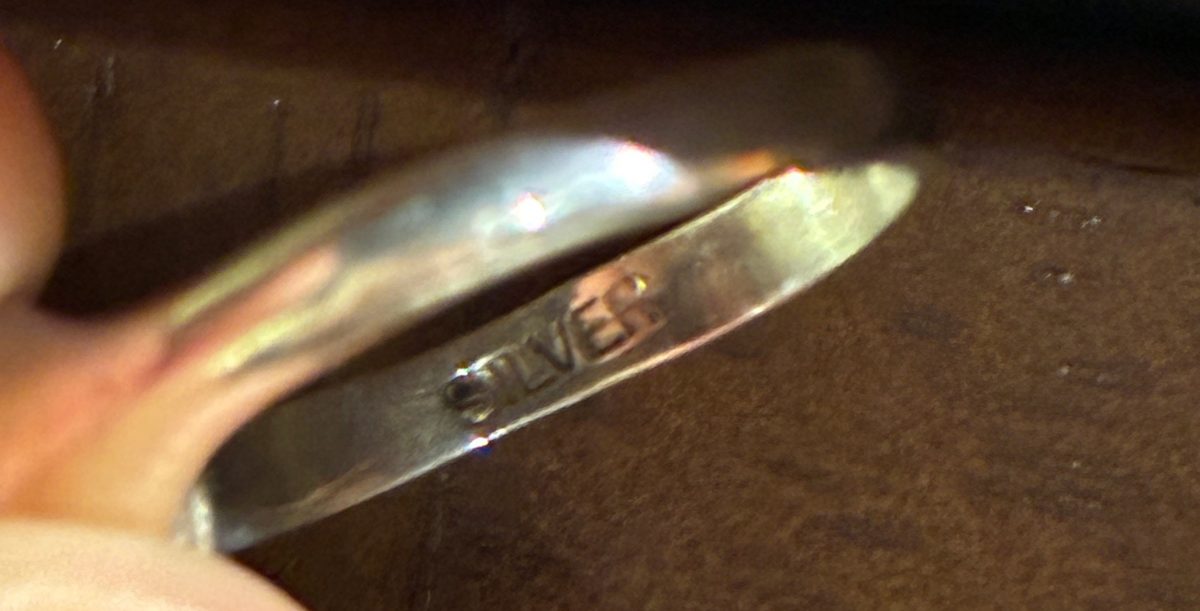
- SILVER on its own names the metal but not the amount. Japan's jewelry industry rules ask that a plain SILVER mark only be used on metal of at least 925, but a piece made elsewhere follows no such rule.
- GERMAN SILVER and NICKEL SILVER are copper, nickel and zinc. There is no silver in them.
- ALPACA is a nickel-silver alloy, often used in Mexico. It contains no silver either.
Where to look on each kind of piece
- Chains: on the clasp, or on a small tag beside it.
- Rings: inside the band, often where the band meets the top.
- Thick pendants: on the side edge, where there is room.
- Flat pendants: on the back.
A sticker is not a stamp
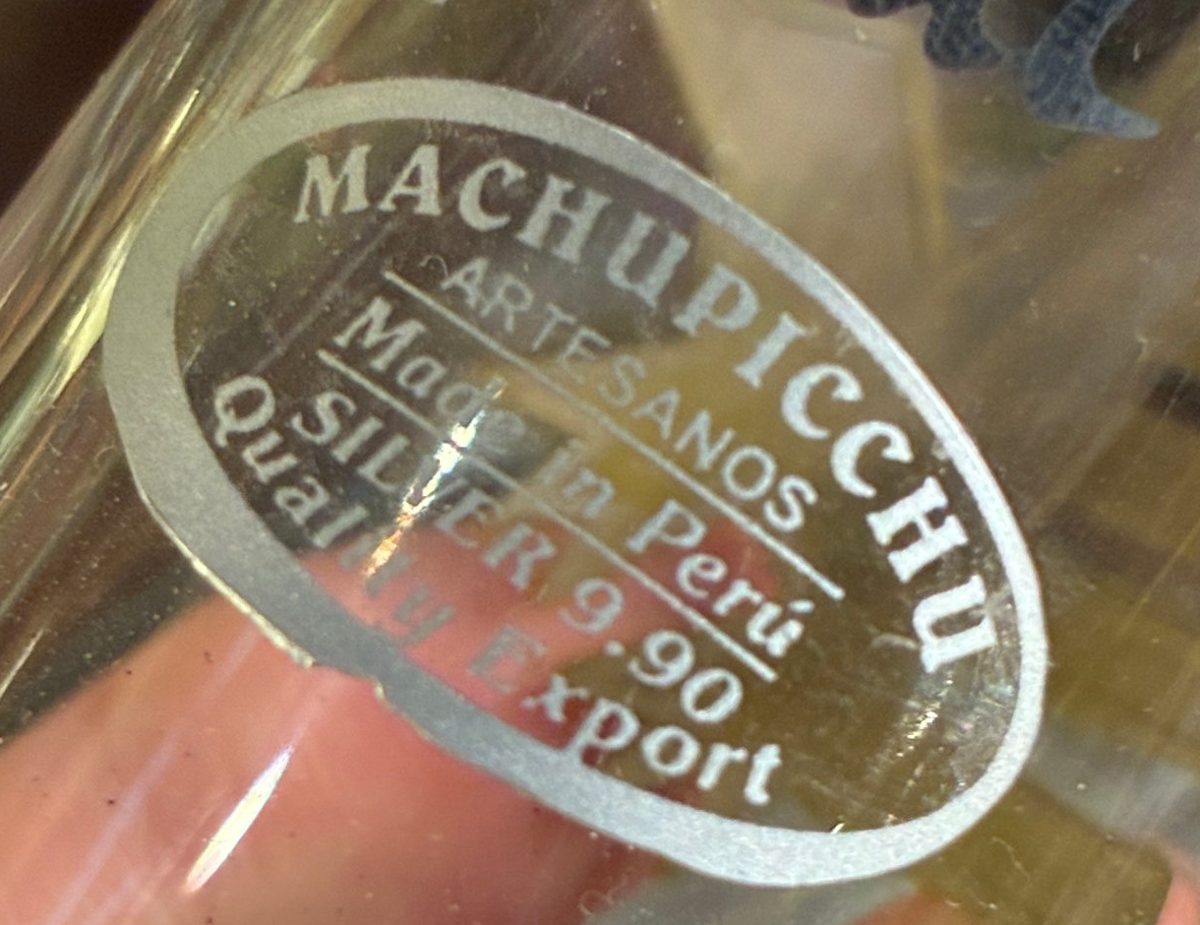
Stickers, tags and cards describe what the seller says about the piece. They fall off, get moved and get reprinted. Read them as a seller's claim. A stamp struck into the metal is the maker's claim, which is stronger, but still not proof.
When the color does not match the stamp
- Yellow or brown with a silver stamp. Silver darkens over time, first yellow, then brown, then black. This is tarnish on the surface, and gentle polishing brings the silver color back. A piece can also be gold plated over silver. If polishing shows a yellow metal underneath, the stamp deserves a closer look.
- Green spots. Green is a sign of copper or brass. On a piece sold as silver, it usually means silver plating over copper or brass. Treat green as a warning, whatever the stamp says.
- Plated copper with a fake 925. Some recent fakes are copper coated in silver and stamped 925. They look right and the stamp looks right. You cannot catch them by eye, so buy from sellers who accept returns and describe how they tested the metal.
Marks that mean a thin layer, not solid metal
Some stamps look like metal marks but say the opposite: the piece is plated or covered with a layer of precious metal over something cheaper. Read the whole stamp, because these letters often sit next to the word SILVER or a karat number.
| Mark | Meaning |
|---|---|
| SP | Silver plated. |
| EP | Electroplated: a thin silver layer added by electric current. |
| EPNS | Electroplated nickel silver. Nickel silver is the same alloy as German silver, so there is no silver under the plating. |
| EPBM | Electroplated Britannia metal, a tin alloy. |
| EPCA | Electroplated copper alloy. |
| EPWM | Electroplated white metal. |
| A1 | A plating quality grade, not a silver standard. Grades run down from A1 to A, B and C. |
| SILVER F | Silver filled: a thicker silver layer bonded to a base metal. |
| Mark | Meaning |
|---|---|
| GP | Gold plated: a very thin gold layer. |
| GE, GEP | Gold electroplated. Treat it the same as GP. |
| HGE | Heavy gold electroplate: a thicker plated layer, but still plating. |
| RGP | Rolled gold plate: a thin gold layer bonded by pressure and heat. |
| GF | Gold filled: a much thicker layer of at least 10 karat gold over a base metal. It lasts far longer than plating, but it is not solid gold. |
| K18GP | Plated with 18 karat gold. Common on Japanese pieces. The karat describes only the layer. |
| Vermeil | Gold over sterling silver. Underneath, the piece is real silver. |
Plating wears through at the edges and on the parts that rub. If you see a different color showing at the corners, the stamp is telling you about the surface only.
Stones and weight
Silver is often priced by weight. On a piece with stones, the scale weighs the stones too. If a seller quotes a price per gram for a turquoise ring, you may be paying silver prices for the stone. Ask for the price of the piece, not the weight.
No stamp at all
Many older pieces and pieces from small workshops have no stamp. That does not make them fake, and a stamp does not make a piece real. Without a stamp, judge the piece on its construction, its wear and a proper metal test.
Each country marks silver its own way
Many European countries use official assay marks with their own symbols, and some share one common mark. Under the international Hallmarking Convention, an assay office can strike a Common Control Mark, which records that the metal was tested; for silver it comes with fineness numbers such as 925 or 800. See the Hallmarking Convention's own explanation.
Japan uses words such as 純銀 for silver of 999 and above, and Chinese pieces may be marked with characters for pure silver. Read the guide to Japanese silver hallmarks. Guides for other countries are on the way.